More US liquefied natural gas for Switzerland – Climate-friendly or a step back in climate policy?
In light of impending tariff sanctions, the Swiss Federal Council is considering direct imports of liquefied natural gas (LNG) from the United States (USA). While this may initially seem like a pragmatic solution, it could pose significant climate policy challenges. According to the latest BAFU:2025 database, this move would substantially worsen Switzerland’s climate footprint.
Analysis of the Data
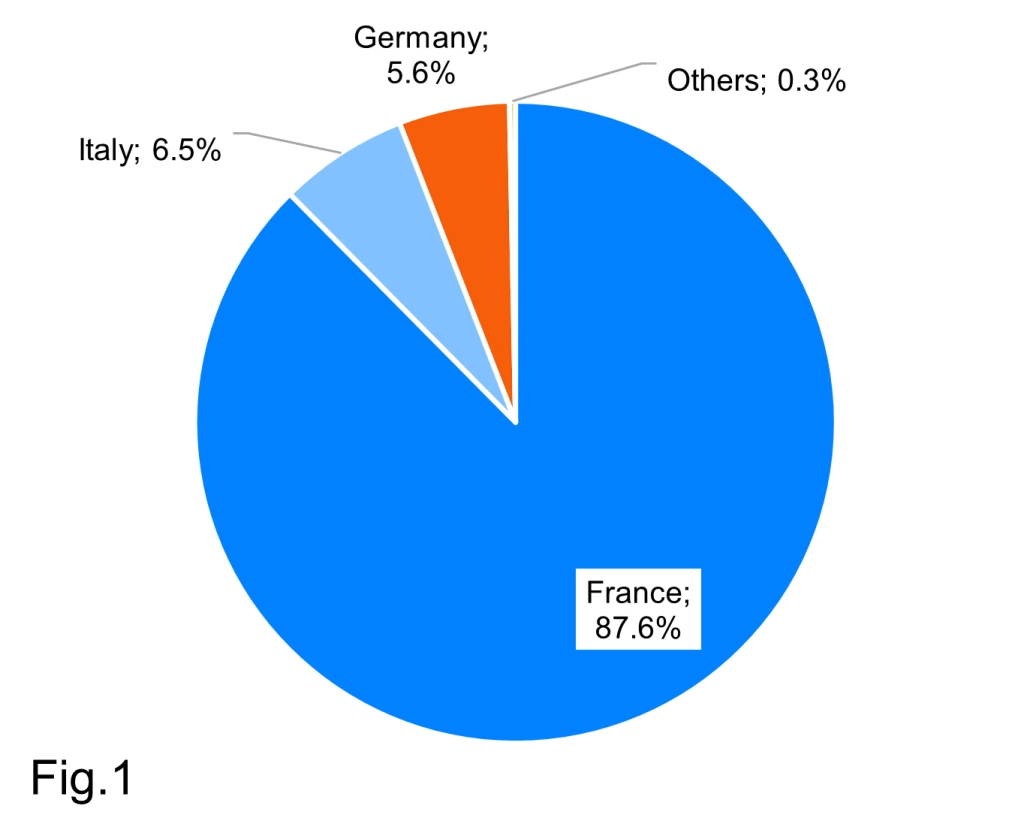
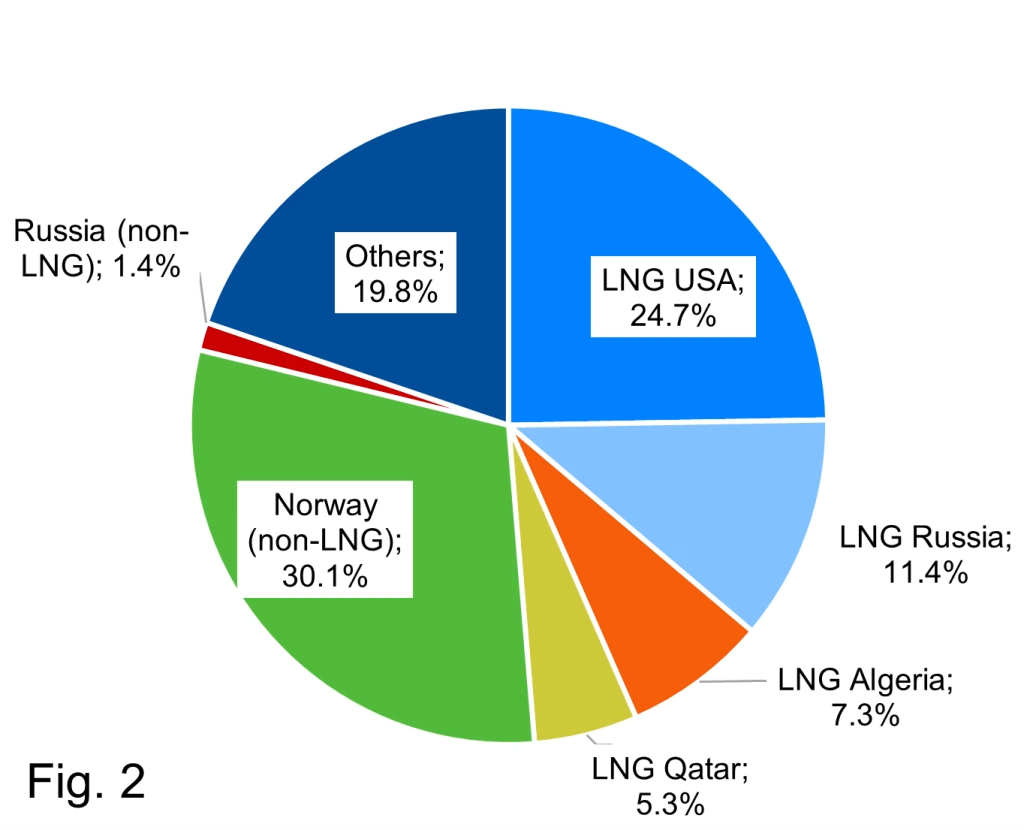
According to an article in “Der Bund” dated August 4, 2025, the Swiss Federal Council is examining the possibility of directly importing US LNG. In 2023, Switzerland primarily sourced its natural gas from France, Italy, and Germany (see Figure 1, left), which themselves mainly imported gas from Norway, the USA, Russia, Algeria, and Qatar (see Figure 1, right). Notably, US LNG already accounted for 25% of Swiss imports indirectly.
ESU investigated the implications of such a switch in a life cycle assessment (LCA). A complete switch to US LNG would have negative climate implications: greenhouse gas emissions associated with the supply of this gas would increase by 50%.
This is due, firstly, to the fact that liquefaction, shipping, and re-gasification are more energy-intensive processes compared to pipeline transport, such as that used for Norwegian gas. Secondly, the extraction of natural gas varies significantly depending on geological conditions and technologies employed at the source, leading to different levels of energy consumption and greenhouse gas emissions (see Figure 2). The removal of pipeline imports from Russia has already increased the emissions in the upstream chain compared to pre-war levels. Transitioning to US LNG would be the least environmentally favourable option.
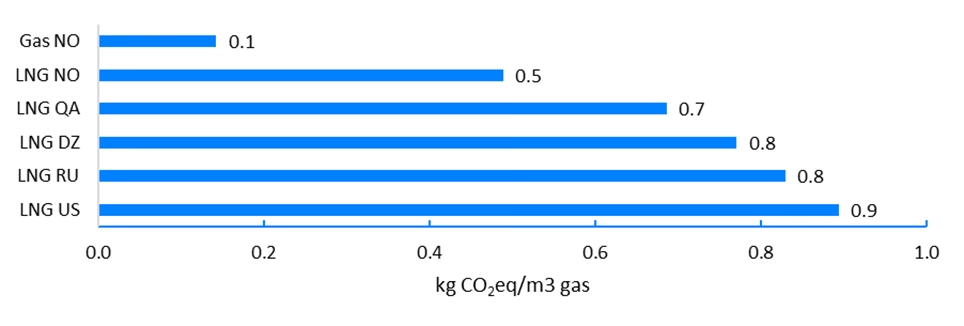
Figure 2: Climate warming potential for the supply of natural gas in France, liquefied via ship transport (LNG from various origins) versus gaseous natural gas via pipeline from Norway. Values are in kg CO2-eq/m3 (IPCC 2021, 100-year horizon).
Relating Emissions to Usage
While most emissions occur during the combustion of the gas—such as in heating systems or industrial facilities—considering this phase reduces the overall increase in emissions due to 100% LNG imports to approximately 10% (9.6%). Nonetheless, even this increase cannot be ignored in the context of ambitious climate targets.
Political Action Required
Switzerland faces a critical energy policy crossroads. The potential import of US LNG is not merely an economic decision but also a political statement on climate policy. If Switzerland is serious about fulfilling its commitments under the Paris Agreement, such decisions must be critically evaluated, and dependence on imported energy should be significantly reduced.
There is an urgent need for broad political and societal debate on the future of Switzerland’s energy supply. The Federal Council should promote transparency and support businesses and consumers in transitioning towards a sustainable, self-determined, and economically viable energy system.
Background and Consulting Services
ESU-services regularly updates life cycle assessment data for global oil and natural gas supply chains. The latest update (2025, referencing 2023) analyzed consumption mixes in 55 countries and four global regions. The Background reports (in English) are available on our website.
The analyses in this article are based on data from the publicly accessible BAFU:2025 database and independent modelling conducted without influence from data providers.
We are happy to prepare transparent studies or advise on questions related to life cycle assessments, carbon footprints, environmental declarations, and more.



